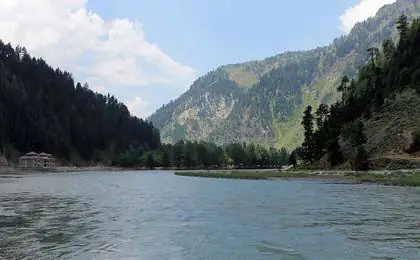
The Valley’s Trekking Gateway
Besal sits at roughly 3,260 metres on the Naran–Babusar road, 48 km north of Naran and about 18 km short of Babusar Top itself — close enough to the pass that the air already carries its chill. Unlike Naran or Shogran, Besal isn’t a resort town; it’s a seasonal high-pasture settlement, inhabited only from June to October by Gujar herding families who graze livestock on its slopes and rent out pack horses and donkeys to trekkers. For most travellers passing through on the Babusar road, Besal is a five-minute photo stop among rolling green shoulders of land. For a smaller number, it is the starting point of one of the Kaghan Valley’s classic multi-day treks.
What makes Besal worth knowing by name, rather than just driving past, is what leaves from here: the trail to Dudipatsar Lake (also spelled Dudipat Sar, meaning “white lake” for the snow-streaked peaks that ring it), one of the valley’s most rewarding high-altitude destinations and one that receives a fraction of Saif ul Malook’s visitors simply because it takes real effort to reach.
The Dudipatsar Lake Trek
Dudipatsar Lake sits at roughly 3,800–3,900 metres, a demanding 6–8 hour trek (one way) from Besal along the Purbi Nar river, climbing through gentle green hillsides, past scattered Gujar summer settlements, and over several snowfields that persist even in mid-August. Most parties treat it as a two-day return trip: trek up and camp near the lake on day one, return to Besal on day two, though very fit hikers occasionally push there and back in a single very long day. Pack horses and donkeys — along with their Gujar owners — are hired directly at Besal, and are strongly recommended for carrying camping gear rather than for riding the trail yourself. The lake is only accessible roughly June to October; beyond that, snow and extreme weather seal it off entirely.
Beyond Dudipatsar, experienced trekking parties sometimes continue over the Nuri Nar (Noori Top) pass toward Sharda in the Neelum Valley, or toward Saral Pass — both serious multi-day undertakings requiring guides, camping equipment and genuine mountain experience.
How to Reach Besal
Besal lies directly on the paved N-15 Naran–Babusar road, 48 km (roughly 1.5–2 hours) from Naran through Batakundi and Jalkhad — no jeep required for the drive itself; any vehicle reaching Babusar Top passes through Besal on the way. It sits about 18 km short of the pass summit. The Dudipatsar trailhead begins right at the settlement, so trekkers typically arrange transport to Besal first (private car, jeep, or as part of a Babusar-bound tour) and continue on foot from there.
Best Time to Visit
Besal is only inhabited and practically visitable from June to October, matching the broader upper-valley season — outside this window the settlement empties and the road itself is typically snowbound. July and August give the most reliable trekking conditions for Dudipatsar, though snowfields linger on the trail even at the height of summer. Early June and late September/October see fewer Gujar families in residence and a higher chance of a cold, quiet crossing.
Costs at a Glance
| Item | Typical Price |
|---|---|
| Pack horse/donkey hire (with Gujar owner, per day) | Rs. 3,000–5,000 |
| Guide for the Dudipatsar trek | Rs. 4,000–6,000/day |
| Camping gear hire (if not carrying your own) | arranged locally, ask ahead |
| Simple tea/food at Besal (seasonal) | Rs. 150–400 |
Where to Stay
Besal itself has no hotels — only seasonal Gujar dwellings and, for trekkers, tents. Base yourself in Batakundi or Naran the night before, drive up to Besal in the morning, and either day-trip the lower trail or commit to camping overnight near Dudipatsar for the full trek. This is not a destination to arrive at without a plan — arrange horses, a guide and camping gear in advance rather than hoping to find them on the day.
Distances & How It Fits Your Itinerary
| From | Distance & Time |
|---|---|
| Islamabad | 278 km · 7.5–8 h (via Naran) |
| Lahore | See Lahore departure guide for route timing |
| Naran | 48 km · 1.5–2 h |
| Babusar Top | ~18 km · 30–45 min |
Besal is not a destination you build a day around unless you are trekking — it is a waypoint on the Babusar run and the doorway to Dudipatsar. Travellers doing the standard Babusar day trip pass through without stopping long; those planning the Dudipatsar trek should treat it as a separate 2–3 day add-on to a longer valley itinerary (5+ days), arranged with a guide, pack horses and camping gear well before departure. It pairs naturally with an overnight at Jalkhad the night before, giving trekkers an early start already at altitude.
Trek Preparation Checklist
Because Besal has no shops beyond basic tea stalls, everything for the Dudipatsar trek should be sorted before you leave Naran or Batakundi: a genuine 3-season sleeping bag (nights near the lake fall well below freezing even in July), a headlamp, water purification tablets or a filter (do not assume every stream is safe untreated), high-energy food for two days, a first-aid kit, and a fully charged power bank since there is no electricity beyond the settlement. Trekking poles help considerably on the loose scree sections and the several snowfield crossings. Confirm horse and guide arrangements by phone before driving up — Besal’s Gujar residents are seasonal, and turning up unannounced expecting horses on a busy weekend can mean a wasted trip. Anyone arranging this through us gets the guide, horses and camping kit organised in advance as part of the package.
Combining Besal with the Rest of the Upper Valley
Because Besal sits at the far end of the drivable valley, almost every visitor reaches it as part of a longer Babusar-bound day rather than as a standalone errand. The natural sequence on our 5-day and longer itineraries runs Naran → Batakundi → Lalazar → Jalkhad → Lulusar → Besal → Babusar Top, with Besal marking the point where meadows give way to bare, high-altitude ground and the air turns noticeably thinner. Trekkers heading for Dudipatsar typically break the journey overnight at Jalkhad or Naran beforehand, reach Besal fresh in the morning, and use the remaining daylight for the first leg of the trail. Treat Besal as a hinge point in the itinerary rather than a destination on its own — it is where the easy sightseeing ends and genuine trekking begins.