📞 0333-0140484 ✉ info@narantours.pk
🕐 Mon–Sun 8 AM – 10 PM 📍 Office 2, Anaya Arcade, DHA Phase 1, Islamabad
🏠 Home 🏔 Kaghan Valley 📦 All Tour Packages 📍 From Islamabad 📍 From Rawalpindi 📍 From Lahore 📍 From Karachi 📍 From Faisalabad 📍 From Multan 📍 From Peshawar 📍 From Sialkot 📍 From Gujranwala 👨‍👩‍👧 Family Tours 💕 Honeymoon 👑 Luxury Tours 💚 Budget Tours 🗺 Attractions 📍 Places to Visit 🏨 Hotels in Naran 🚙 Jeep Rental 🌡 Naran Weather 📖 Travel Guide 📝 Blog 📬 Contact Us
📞 0333-0140484 💬 WhatsApp
Babusar Top Full Day — Lalazar + Lulusar + Summit — Naran Kaghan Valley, Pakistan
4,173m · Challenging

Babusar Top Pass

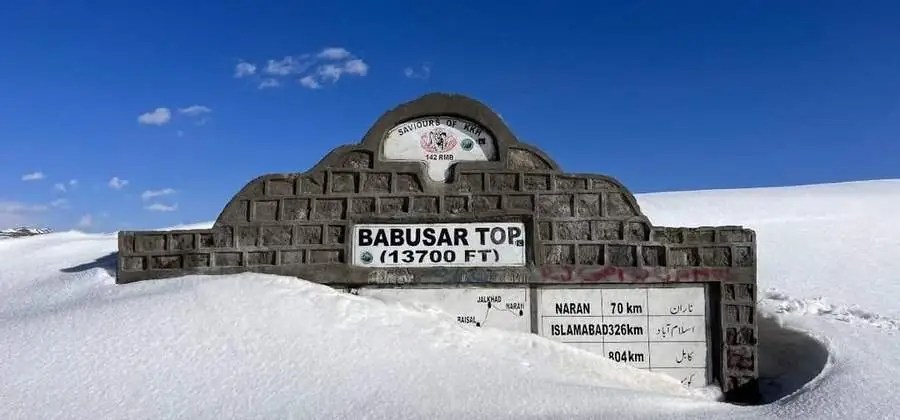
Crown of Kaghan Valley at 4,173m. KPK/Gilgit-Baltistan border. Snow visible in July. Nanga Parbat views on clear days. Opens mid-June 2026.

4,173m (13,691 ft)Altitude
85 kmDistance from Naran
3–4 hours one wayDrive Time
Rs. 100/personEntry Fee
Mid-June (approx.)Road Opens 2026
At a Glance
  • Highest point in the valley at 4,173m (13,691 ft)
  • 66 km / 2.5-3 hours from Naran on a fully paved road
  • Open mid-June to late September only; closed the rest of the year
  • Connects to Chilas and the Karakoram Highway toward Hunza/Gilgit
  • Day trips from Rs. 6,500 per person; private jeep Rs. 9,000-12,000 return
✅ Who is this best for?
  • Road-trip lovers — one of Pakistan's great high-pass drives
  • Travellers continuing to Hunza, Gilgit or Skardu via Chilas
  • Photographers chasing Nanga Parbat views and snow-line scenery
  • Visitors who want a 4,000 m experience without trekking
⚠️ Not suitable for
  • Infants and anyone with serious cardiac or respiratory conditions — 4,173 m is genuine altitude
  • Travellers prone to severe motion sickness (sustained switchbacks)
  • Anyone visiting outside mid-June–September, when the pass is closed

About Babusar Top Pass

The Highest Road Pass in the Kaghan Valley

At 4,173 metres (13,691 ft), Babusar Top is the dramatic full stop at the end of the Kaghan Valley — the mountain pass where the N-15 road finally crests the Himalayan watershed and drops into Chilas and the Karakoram Highway beyond. Stand on the top on a clear morning and you can see two worlds at once: the green, glacier-fed Kaghan side behind you and the stark, arid mountains of Gilgit-Baltistan ahead. On exceptional days Nanga Parbat (8,126 m), the world’s ninth-highest mountain, is visible on the northern horizon.

The pass is named after Babur, the founder of the Mughal Empire, who is said to have moved through this region in the 16th century — “Babusar” being a corruption of “Babur Sar”, the summit of Babur. Until the Karakoram Highway opened in the 1970s, this was one of the main summer routes between the Punjab plains and Gilgit. Today it is a bucket-list drive: 66 km of switchbacks from Naran through Batakundi, Jalkhad, Besal and Gittidas, climbing through every shade of alpine scenery before the final zigzag to the top.

What You’ll See on the Drive Up

The Naran–Babusar road is a highlights reel of the upper valley. Batakundi (16 km) marks the tree line with its riverside hotels. Jalkhad (34 km) opens into vast camping meadows beside the Kunhar. Lulusar Lake (48 km) sits right beside the road — the largest natural lake in the valley and the source of the Kunhar River. Past Besal, the landscape turns treeless and Tibetan; Gittidas meadows glow green against black scree slopes. The final 8 km of hairpins deliver you to the prayer-flag-strewn summit, where nomad stalls sell chai and instant noodles at the top of the world. Snow banks line the road well into July.

How to Reach Babusar Top

From Naran it is a 66–70 km drive taking 2.5–3 hours each way. The road is paved the whole way but steep, narrow and exposed in sections — confident mountain driving or a hired driver is strongly recommended. Options: join a group tour (Babusar day trips from Rs. 6,500 per person including transport from Naran), hire a private 4×4 with driver from Naran (Rs. 9,000–12,000 return), or drive yourself if your car has good ground clearance and brakes you trust. There is no fuel beyond Naran — fill up before you leave. Police checkpoints at Batakundi and Besal log vehicles; carry your CNIC or passport.

Opening Dates and Best Time

Babusar Top typically opens between mid-June and early July, once FWO snow-clearing crews cut through drifts that can exceed six metres, and closes with the first heavy snowfall in late September or October. Exact dates vary each year with the snowpack — check our Babusar opening dates guide for current status before planning. Within the season, mornings are best: the pass is frequently clouded over or windswept after 2 PM, and afternoon thunderstorms are common in July. Weather on top can be 15–20°C colder than Naran — snow flurries happen even in August.

Costs at a Glance

Item Typical 2026 Price
Group day tour from Naran from Rs. 6,500 per person
Private 4×4 with driver (return) Rs. 9,000–12,000 per jeep
Entry fee Free
Chai / snacks at the summit stalls Rs. 100–300

Where to Stay

Most visitors day-trip from Naran, 2.5–3 hours away — see our hotels in Naran guide. For a head start on the pass, stay in Batakundi, 45 minutes closer, where riverside hotels like Luxus Grand offer the valley’s quietest nights. There is no accommodation at the pass itself.

Suggested Itinerary

Classic Babusar day from Naran: depart 7 AM → photo stop at Lulusar Lake 8:15 → Gittidas meadows → summit by 10 AM for 60–90 minutes on top → picnic lunch at Jalkhad on the way down → back in Naran by 3–4 PM. This is day three on our 4-day Naran packages and available as a standalone day trip.

Distances & How It Fits Your Itinerary

From Distance & Time
Islamabad 300 km · 8–9 h
Lahore 450 km · 10–12 h
Naran / local 66 km · 2.5–3 h

The Babusar day is really a four-stop day: Batakundi’s river, Jalkhad’s plains, Lulusar’s shoreline and the summit itself — build photo time for all four. Travellers continuing north drop straight to Chilas and the Karakoram Highway for Hunza; everyone else returns to Naran by mid-afternoon before the light flattens. In shoulder weeks, confirm the pass is open before committing the day.

🏔 Book: 4-Day Family Explorer 💬 Ask on WhatsApp 📞 0333-0140484
9+ YearsOperating Since 2017
30Standing Itineraries
14Destinations Covered
40Hotels Verified Yearly
Plan Your Visit

Tours, Hotels & Guides for This Trip

🏔 Tour Packages

3-day tours from Rs. 12,500 · 4-day · 5-day · all 30 packages

🏨 Where to Stay

Hotels in Naran · Shogran · Batakundi · Balakot

📍 Related Destinations

Lulusar Lake · Lalazar Meadows · Lake Saif ul Malook

FAQ

Babusar Top Pass — Frequently Asked Questions

The pass usually opens between mid-June and early July once snow-clearing is complete, and closes in late September or October with the first heavy snowfall. Exact dates depend on the winter snowpack — WhatsApp us at 0333-0140484 for the current road status before you travel.

4,173 metres (13,691 ft) above sea level — the highest point in the Kaghan Valley and one of the highest paved-road passes in Pakistan accessible by ordinary vehicles in summer.

2.5 to 3 hours each way for the 66–70 km climb, plus stops. As a day trip from Naran with photo stops at Lulusar Lake and Gittidas, plan on 8–9 hours door to door.

In good mid-season conditions, yes — the road is fully paved and sedans make it up daily in July and August. Early and late season, snowmelt damage and water crossings can make a 4×4 or high-clearance vehicle much safer. If in doubt, hire a local driver from Naran.

At 4,173 m, many visitors feel headache, breathlessness or light nausea, especially if they drive up quickly from the plains. Keep summit time to 1–2 hours, walk slowly, hydrate, and skip the trip if you have serious heart or lung conditions. Children and elderly visitors should take it particularly gently.

On clear days, yes — Nanga Parbat (8,126 m) is visible on the northern horizon from the summit area. Early mornings from June to September give the best chance before cloud builds up.

Almost always. Roadside snow banks persist well into July, and brief snow flurries can occur on the summit even in August. Summit temperatures often sit near 0–5°C when Naran is a pleasant 25°C.

A proper warm jacket, beanie, sunglasses (the glare off snow is intense), sunblock, water, snacks, motion-sickness tablets for switchback-sensitive passengers, and your CNIC or passport for the checkpoints at Batakundi and Besal.

Yes — the road descends 40 km from the pass to Chilas on the Karakoram Highway, making Babusar the scenic summer route to Gilgit, Hunza and Skardu. Several of our 6–7 day combination tours use exactly this routing.

With sensible precautions, yes. Thousands of families visit every summer. Keep the summit stop short (under an hour for toddlers), dress children in warm layers, and watch for altitude symptoms like unusual drowsiness or vomiting — descend immediately if they appear.

No fuel beyond Naran — fill your tank before departing. Seasonal stalls at Jalkhad, Besal and the summit sell chai, biscuits and instant noodles, but carry your own water and a packed lunch for flexibility.

Our standalone Babusar day trip runs from Rs. 6,500 per person, and the pass is built into every 4-day and longer Naran itinerary from June to September, including family, honeymoon and luxury versions. See the full list on our tour packages page.

Visit Babusar Top Pass

Our packages include the jeep safari and guide — WhatsApp your dates for an instant quote.

🏔 Book a Tour