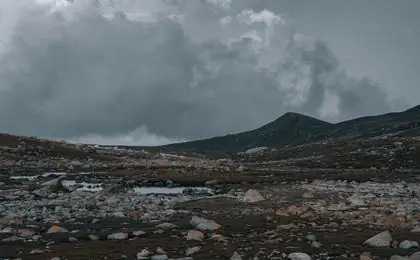
The Tear-Shaped Lake
Ansoo Lake is the Kaghan Valley’s holy grail: a lake shaped uncannily like a human eye shedding a tear — complete with an islet “pupil” and a wisp-shaped outflow — hidden in a bowl beneath Malika Parbat at 4,245 metres. Remarkably, the lake was only brought to wide public attention in the 1990s, reportedly spotted by Pakistan Air Force pilots on a training flight, and to this day it reveals its famous shape only from the high viewpoint above it, never from the shore. “Ansoo” means teardrop in Urdu, and the local legend ties the tear to the same fairy-tale of Saif ul Malook and Badri Jamala told an hour’s flight of crow below.
Reaching it is the hardest day-adventure in the valley — a genuine high-altitude trek, not an excursion — and that difficulty is precisely why Ansoo remains pristine while Saif ul Malook receives its thousands. If you are fit, acclimatised and accompanied by a guide, it is the most rewarding single day the Kaghan Valley offers.
The Trek: What to Expect
The standard route starts at Lake Saif ul Malook (3,224 m). From the far shore, the trail climbs steadily through meadows and moraine toward the Malika Parbat massif, gaining roughly 1,000 vertical metres over 7–8 km to the viewpoint ridge at about 4,250 m. Fit trekkers take 4–5 hours up and 3 hours down — an 8–9 hour day door to door from Naran with the jeep transfers. Hiring a horse for the first two-thirds (about Rs. 4,000–6,000 return) is common and sensible; the final ascent to the viewpoint is on foot for everyone, steep and loose underfoot. There is no shelter, no food and no water source you should trust en route — carry a full day’s supplies.
When to Go
The window is short: July to late August, when the trail is snow-free and the lake fully thawed. In June the route still crosses steep snow patches (turn-back territory for casual trekkers), and by mid-September fresh snow can arrive any week. Even in the window, weather changes violently around Malika Parbat — start at first light, aim to be at the viewpoint before noon, and be walking down before the routine afternoon cloud and thunder build-up. Guides watch the sky better than any forecast; heed them.
Difficulty, Fitness and Altitude
Grade the trek strenuous. You start high (3,224 m) and top out near 4,250 m — altitudes where unacclimatised trekkers commonly feel headaches, nausea and heavy legs. Spend at least one full day and night in Naran (2,409 m) beforehand, ideally with the Saif ul Malook excursion as a warm-up. Children under roughly 12, and anyone with significant heart, lung or joint conditions, should not attempt it. Good boots, trekking poles, 2+ litres of water per person, sun protection and a warm/waterproof layer are non-negotiable.
Costs at a Glance
| Item | Typical Price |
|---|---|
| Licensed local guide (day) | Rs. 4,000–6,000 |
| Horse with handler (partial route, return) | Rs. 4,000–6,000 |
| Jeep Naran→Saif ul Malook (return) | Rs. 3,500–4,500 |
| Guided Ansoo day add-on to our packages | from Rs. 8,500 per person |
Where to Stay
Base in Naran the nights before and after — the pre-trek night matters for acclimatisation, and you will want a hot shower and a real bed afterwards. There is no accommodation or legal camping at the lake itself; the environment above 4,000 m here is fragile and patrolled in season.
Distances & How It Fits Your Itinerary
| From | Distance & Time |
|---|---|
| Islamabad | 247 km to trailhead · 6.5 h + trek |
| Lahore | See Lahore departure guide for route timing |
| Naran / local | 9 km jeep + 7–9 h trek |
Ansoo is the trip you build a buffer around: acclimatise with an easy Saif ul Malook day first, trek on the clearest forecast morning, and keep a spare day for weather. Non-trekking family members can spend the same day boating at the lake and exploring Naran — the trek party returns by late afternoon. Book the guide when you book the tour, not at the trailhead.